
RBI Governor Shaktikanta Das on Friday said the entry of big tech firms into the financial sector poses systemic concerns like overleveraging at the borrowers' ends.
Prime Minister Narendra Modi will on Friday launch two schemes of the Reserve Bank of India (RBI) that may go a long way in changing how the household sector invests, and complains if anything goes wrong with their savings. These schemes - retail direct and an integrated ombudsman - will be launched by the Prime Minister virtually, in the presence of Finance Minister Nirmala Sitharaman. With the introduction of retail direct, a common man can directly take a position in government securities (G-Sec), considered to be the safest asset class a sovereign can offer.
The Financial Sector Legislative Reforms Commission had in a report last year proposed a unified regulator for the entire financial sector -- markets, insurance, commodities and pension. It had, however, proposed to keep banking out of its purview for now.

Crypto-assets are essential to blockchain technology, which has the potential to be one of the next major growth drivers for the software ecosystem in India. A prohibition would nip this opportunity in the bud, say Vaibhav Parikh and Jaideep Reddy.
Reserve Bank Governor Shaktikanta Das on Wednesday said underlying economic activity in India continues to be strong, but external factors will cause some "dent" to the economy. Speaking at the BFSI Insight Summit 2022 organised by Business Standard, Das said the RBI tracks 70 fast moving indicators and most of them are in the "green box". It is the external sector, mired by a fear of recession or clear visibility about slowing growth in a large part of the world, where the challenges lie, he said, adding that the impact of external demand will "dent" the economy.

'It's a debatable topic, and we will submit our comments to the RBI by June 15.'

Outward remittances under the Reserve Bank of India's (RBI's) liberalised remittance scheme (LRS) surged by 50.64 per cent to $9.1 billion in the April-June quarter (first quarter, or Q1) of 2023-24 (FY24), driven by healthy growth across segments due to a revision in the timeline of tax collected at source under the LRS scheme and normalisation in international travel. Major drivers include equity and debt investments, deposits, and the international travel segment, among others. According to the latest RBI data, the amount remitted under LRS stood at $9.1 billion in Q1FY24, compared with $6.05 billion in the same quarter last year.

He said the transformation brought about by the fintech sector in India is not just limited to technology, but its social impact is far-reaching. He also stressed that fintech has dented the parallel economy and is bridging the gap between villages and cities on the financial services front. The prime minister also said that in the last 10 years, the fintech space has attracted investments of more than $31 billion and fintech startups have grown by 500 per cent.
In the context of market integrity, the IRAI and RBI should go over the minutes of the LIC and SBI board meetings when the decisions to invest in Adani equity or debt were taken, notes Jaimini Bhagwati, former World Bank treasury professional.

Has Vijay Shekhar Sharma given up on the bank? For now, he seems to be on a save-OCL mission. The bank will face its logical end, observes Tamal Bandopadhyay.

The Reserve Bank on Thursday asked banks and other financial institutions to report to the government details about accounts resembling 10 individuals who have been designated as terrorists by the Union home ministry earlier this month. On October 4, the Union Ministry of Home Affairs (MHA) had designated a total of 10 members of Hizbul Mujahideen (HM), Lashkar-e-Taiba (LeT) and other proscribed outfits as terrorists under the Unlawful Activities (Prevention) Act (UAPA). Those designated as terrorists include Habibullah Malik alias Sajid Jutt, a Pakistani national, Basit Ahmad Reshi, who hails from Jammu and Kashmir's Baramulla but is currently based in Pakistan, Imtiyaz Ahmad Kandoo alias Sajad, who hails from Jammu and Kashmir's Sopore but now lives in Pakistan, Zafar Iqbal alias Salim, who is from Poonch but presently residing in Pakistan, and Sheikh Jameel-ur-Rehman alias Sheikh Sahab, who hails from Pulwama.

The Governor said RBI does not limit itself too much when there is uncertainty.

The Reserve Bank on Friday said it will soon commence the pilot launch of e-rupee for specific use cases with a view to bolstering India's digital economy, making payment systems more efficient, and checking money laundering. In a concept note on Central Bank Digital Currency, the RBI said CBDC is aimed to complement, rather than replace, current forms of money and is envisaged to provide an additional payment avenue to users, not to replace the existing payment systems. "Supported by state-of-the-art payment systems of India that are affordable, accessible, convenient, efficient, safe and secure, the Digital Rupee (e?) system will further bolster India's digital economy, make the monetary and payment systems more efficient and contribute to furthering financial inclusion," the paper said.

The Financial Stability and Development Council meeting on Tuesday started with an air of tension in the room. An official present described the participants' body language as "tetchy". However, once presentations and discussions begun, the mood considerably eased.

Senior bankers point out that while they will eventually attract qualified professionals, onboarding them takes time.

'A possible post-election growth momentum may be lost.'

The Reserve Bank of India has on Wednesday lifted the ban on new customer acquisition by American Express which was imposed with effect from May 2021 due to non-compliance with local data storage norms. "In view of the satisfactory compliance demonstrated by American Express Banking Corp. with the Reserve Bank of India (RBI) circular dated April 6, 2018, on Storage of Payment System Data, the restrictions imposed, vide order dated April 23, 2021, on onboarding of new domestic customers have been lifted with immediate effect," RBI said. Similar bans were imposed on Diners Club International and Mastercard previously.
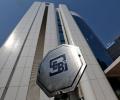
The Securities and Exchange Board of India (Sebi) might relax the disclosure norms around rumour verification to help smooth implementation and ease compliance amid pushback from India Inc, said people in the know. The rule has been notified following amendments to the Listing Obligations and Disclosure Requirements (LODR) by Sebi. However, its implementation has been deferred until February.

Markets regulator Sebi has barred industrialist Anil Ambani, 24 other entities, including former key officials of Reliance Home Finance from the securities market for five years for diversion of funds from the company. Sebi has imposed a penalty of Rs 25 crore on Ambani and restrained him from being associated with the securities market including as a director or Key Managerial Personnel (KMP) in any listed company, or any intermediary registered with the market regulator, for a period of 5 years.
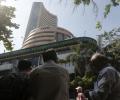
Domestic bourse BSE has approved the acquisition of a 50 per cent stake in index provider Asia Index (AIPL) from equal joint venture partner S&P Dow Jones (SPDJ) Indices for Rs 30 crore. AIPL, the index provider, is responsible for compiling and maintaining the widely followed Sensex, Bankex, and other indices. Passive funds with assets of nearly Rs 2 trillion are benchmarked with indices provided by AIPL.

Let's wait for the monetary policy on February 8 -- to see how it complements the fiscal commitments, points out Tamal Bandyopadhyay.

RBI's oversight cadre move creates HR trouble, officers threaten agitation.

Operationalising the ban is being fleshed out: it will entail which cryptocurrencies will be banned and how.

If raters get away by moving from AAA to D overnight after companies default, as happened with DHFL, YES Bank, RCom, and IL&FS, it shows a complete breakdown in the rating system. It calls for exemplary punishment, not kid glove treatment, says Debashis Basu.
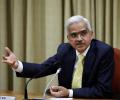
Reserve Bank Governor Shaktikanta Das on Thursday said cryptocurrencies are a "threat to macroeconomic and financial stability" and cautioned investors against punting on them, days after the Union government's move to tax the gains made from cryptocurrency trades. In the Union Budget for 2022-23 presented in Parliament on February 1, the government proposed levying a 30 per cent tax on gains made on cryptocurrency trades by investors and the announcement was welcomed by cryptocurrency industry players, saying it legitimises their trades. Das invoked the 17th century 'tulip mania', widely considered to be the first financial bubble, to caution investors, saying the cryptocurrencies do not even possess the value of the exotic flower.
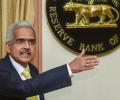
Central banking is a science, not an art, Tamal Bandyopadhyay tells RBI Governor Shaktikanta Das.

Digital lending apps extend small amounts at exorbitant rates. Payment delays invite messages to customer or close family members, often with sensitive information such as Aadhaar and PAN Card scans.

'If the RBI had done the right things, these mistakes would not have happened in banks, public or private,' says Ajay Shah.
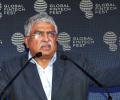
'Binary fission will happen -- startups will lead to more startups.'

HDFC Bank, the country's largest private-sector lender, lost to competition wholesale loans of around Rs 50,000 crore after it increased interest rates in May, said Chief Financial Officer Srinivasan Vaidyanathan in an analyst call. "There were some customers who were offered lower rates by other market participants. "But we decided not to cut back on our rates," he said while addressing analysts after the announcement of the bank's Q1 earnings.

Companies think they are too big to bow before regulators.

The meeting will review the current global and domestic economic situation and financial stability issues, including those concerning banking and NBFCs.
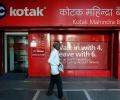
Cracking down on repeated non-compliance of IT norms, the RBI on Wednesday barred Kotak Mahindra Bank from onboarding new customers through its online and mobile banking channels and issuing fresh credit cards with immediate effect after the regulator found "serious deficiencies" in the lender's IT risk management. These actions, the RBI said, are necessitated based on significant concerns arising out of Reserve Bank's IT examination of the bank for the years 2022 and 2023 and the continued failure on part of the bank to address these concerns in a comprehensive and timely manner.

In mid-March this year, the finance ministry asked state-run banks to review their gold loan portfolio for the two-year period between January 1, 2022, and January 31, 2024. This business had grown at a fast clip. Reserve Bank of India (RBI) data has it that it grew 15 per cent to Rs 1 trillion in FY24. Now, in recent times, any kind of exuberance in financial services has seen the authorities swoop down - be it pushing the lines on governance or unsecured credit.

The Indian financial system's asset quality improved despite the pandemic, but it could be due to special dispensations by the regulator, and banks would likely see increased stress on their books once the schemes expire. According to the annual trend and progress report of the Reserve Bank of India (RBI) released on Tuesday, the data available for this financial year so far indicate that banks' bad debts have moderated while provision coverage ratios (PCRs), capital buffers as well as profitability indicators have improved relative to pre-pandemic levels.

The RS allows the regulator, innovators, financial service providers and customers to conduct field tests to collect evidence on the benefits and risks of new financial innovations, while carefully monitoring and containing their risks.

Will take their views on improving investment climate and boosting economy.

'Whether I am optimistic or pessimistic is not the issue; I am just going by the evidence available.' 'The Indian economy and financial sector are now well-placed and very resilient in dealing with any kind of spillover coming from the external world.'
The banking regulator is seeking an early exit mechanism for private banks under Prompt Corrective Action.

Tension between the government, specially the finance ministry, and RBI is as old as the central bank itself.
